

Sketching the Future of Quantum.
Welcome! This is a personal blog of a guy fascinated by quantum many-body sciences and its technological applications to the human society.
Self-portrait.
Who am I and what is this blog about.
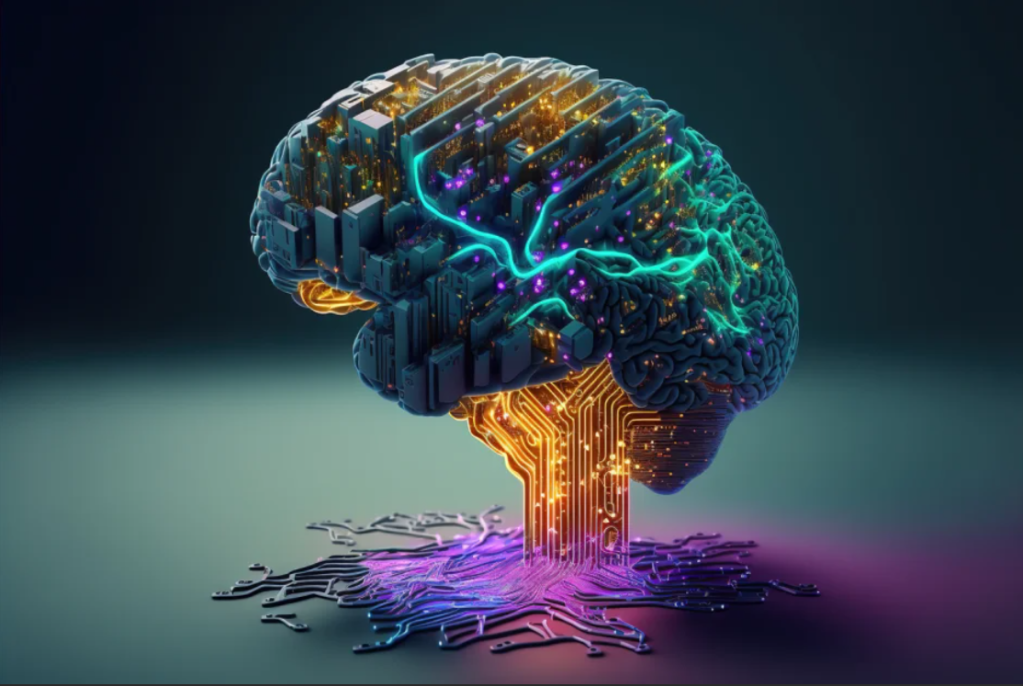
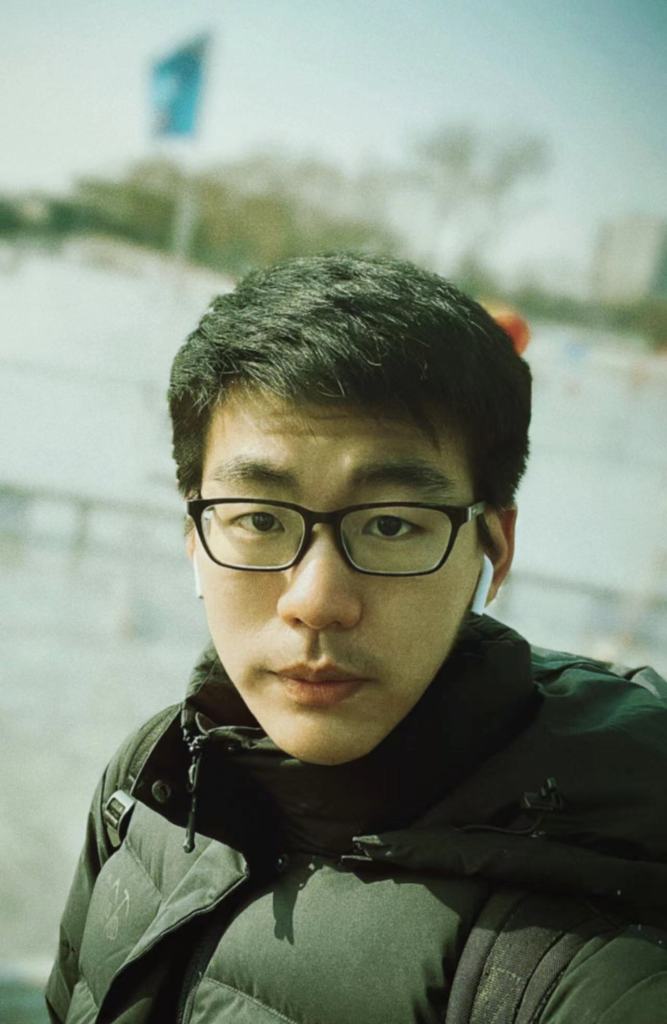
Physics
I am currently a researcher in experimental physics in the field of condensed matter physics. I used to study theoretical condensed matter physics but now I work on the cryogenic electronic experiments of it as professional.
Engineering
I prefer to call myself an engineer rather than a scholar. I aim to engineer what I get in the lab to make real technological impact to the society. I am interested in building the bridges from solid state physics to quantum nanoelectronics.
Mathematics
Theories used to be my best friend. I used to enjoy learning fancy mathematics, but now treat them as tools and puzzle games, such as abstract algebraic tools in quantum many-body theory. Interestingly, some of them are very useful to real world experiments.
Computer Sciences
As a CS amateur, I keep writing different codes & algorithms in my work from scratches to scripts to make the theories executable and processes automatic. I enjoy developing software interfaced with experimental hardware.
Philosophy
In the end, the whole structure of my thoughts and actions are built consistently within my philosophical system: a materialistic, constructivistic and socialistic ideology.
Literatures & Others
Reading literatures & humanities & history is my great hobby to escape from the cruel reality in life. Unlike the instrumental rationality, there is never an absolutely rationality of living our own lives.
Throughout my life, I seek to understand and change the universe from my own perspective.
My worldview is deeply rooted in three questions: Who am I? What is the nature of the natural world and society around me? And what can I do to make the world a better place?
The first question lays the philosophical foundation for my values. I do not see myself simply as a technologist concerned only with cold rationality, or as a theorist guided only by personal intellectual interests. I am, first and foremost, a human being. For me, the questions we ask ultimately return to an examination of ourselves—who we are and what we value—and extend outward into a willingness to transform the world around us.
The second question guides me to explore and understand nature and society as deeply and broadly as possible. Physics is the path I follow to study the natural world from first principles. Philosophy and sociology provide me with frameworks for understanding the people, relationships, and social structures around me.
The third question leads me to draw on what I have learned about myself—my self-knowledge—and what I have learned about the outside world through the natural and social sciences to bring about change. This requires not only theories, but also practical technical and engineering work. This is what I am learning and doing now.
These values, together with the knowledge and experiences that shape them, consolidate into my current professional interests:
- Condensed matter and quantum many-body physics.The development of quantum mechanics transformed humanity’s understanding of the microscopic world. Throughout the twentieth century, its founders and subsequent generations of physicists established powerful theories of atoms and their constituents. Quantum field theory further advanced our understanding of elementary particles and their interactions, culminating in the Standard Model. In parallel, theories of noninteracting particles and effective quasiparticles provided a foundation for understanding many properties of solids.Yet detailed knowledge of individual particles does not automatically yield a complete understanding of how many particles organize themselves or what phases they form. In other words, knowing the properties of atoms does not, by itself, explain the properties of the materials they constitute. This is where reductionism alone becomes insufficient and the concept of emergence shows its power.Following in the footsteps of Lev Landau, P. W. Anderson, and other great physicists, modern condensed matter physics has developed into a vast field, encompassing profound ideas ranging from spontaneous symmetry breaking to topological order in interacting electron systems. I am fascinated by quantum many-body phenomena, especially those that cannot be adequately understood through a single-particle description, such as high-temperature superconductivity, the fractional quantum Hall effect, and Kondo physics.
- Quantum transport and microelectronic experiments.Many contemporary quantum many-body theories explore electronic states beyond Landau’s Fermi-liquid paradigm. Alongside these developments, powerful experimental tools have emerged to probe collective quantum behavior in materials. Theory and experiment can inform each other through intricate but productive exchanges. Nevertheless, the growing complexity of the field can also make it difficult for researchers on either side to communicate with one another.I am particularly drawn to quantum transport as one of the most direct and powerful ways to investigate correlated electronic states and connect experimental observations with condensed matter theory. Measurements of electrical resistance and conductance have provided decisive evidence for superconductivity, quantum Hall states, and the Kondo effect. These observations helped motivate and test major theoretical advances, including BCS theory, topological descriptions of electronic states, and renormalization-group treatments of the Kondo problem.Moreover, modern quantum transport experiments extend far beyond conventional DC four-probe measurements. They can incorporate mature microelectronic technologies, including analog, radio-frequency, and digital circuits. These technologies open another rich field of knowledge, shaped by electrical engineering and the development of modern microelectronics.There are profound theories to test and develop, direct experiments to perform, and a rich set of engineering tools to draw on. This combination is why I am fascinated by electronic transport experiments, microelectronic engineering, and modern very-large-scale integration (VLSI) circuit design.
- Programmable correlated electrons in two-dimensional materials. The first two interests define the physics I want to explore and the experimental and engineering approaches I want to use. My chosen platform is atomically thin two-dimensional materials, particularly the family of transition metal dichalcogenides (TMDs).These materials include semiconductors, metals, and superconductors whose electronic properties can be tuned through thickness, gating, and heterostructure design. Their transition-metal d-orbital character, often substantial effective masses, strong spin–orbit coupling, and reduced dielectric screening provide rich opportunities to explore correlated electronic behavior.More intriguingly, stacking monolayer TMDs with a controlled twist angle or lattice mismatch can produce moiré superlattices with narrow electronic bands. By suppressing the kinetic-energy scale relative to electron–electron interactions, these structures create fertile ground for strongly correlated states. Superconductivity with signatures of unconventional behavior, the fractional quantum anomalous Hall effect, and evidence of topological Kondo insulating states have now been reported in different moiré TMD systems, with transport measurements playing a central role.These materials can also be fabricated into gated transport nanodevices using architectures reminiscent of silicon MOSFETs, although they require specialized fabrication techniques. This capacity for device integration greatly expands our ability to tune their delicate electronic states.My long-term goal is to develop programmable control over correlated electronic states in two-dimensional TMD materials, combining scalability, high-fidelity manipulation, and robust quantum behavior. I am pursuing several related directions:
- Wafer-scale growth of monolayer TMDs and their integration into FET architectures. A major obstacle to practical applications is the variability and limited scalability of assembling individual devices through flake transfer. Overcoming this challenge requires large-area, exceptionally clean growth of monolayer TMDs, together with reliable methods for automated transfer and integration into circuits at the wafer scale.If these processes can meet the thermal-budget and materials-compatibility requirements of silicon manufacturing, TMD transistors could be integrated into the back end of line (BEOL) of existing technologies. Looking further ahead, achieving scalable, dual-gated moiré TMD architectures with precise control over twist angle and interface quality would provide an important foundation for the next goal.
- Universal fault-tolerant quantum computation with non-Abelian anyons in moiré TMDs. The observation of the fractional quantum Hall effect in bilayer graphene as well as anomalous Hall effect in twisted MoTe₂ and rhombohedral graphene has established a platform for exploring electronic phases expected to support anyonic excitations. These excitations emerge from strongly correlated many-body states and cannot be captured by an independent-particle description of the underlying electrons. Anyonic interferometry experiments and their braiding architecture has been established in bilayer graphene systems, which are very suitable to perform mesoscopic transport at a high magnetic field. TMD systems, on the other hand, is hard to perform DC transport but host a richer variety of quantum states and with higher temperature scales. Certain proposed phases in moiré TMDs may host non-Abelian anyons, whose collective states could encode quantum information with intrinsic topological protection. RF transport provides a suitable capacitively or inductively coupled circuit structure to approach these states in TMDs, while large-CVD growth enables scalability. Establishing these excitations experimentally and learning to initialize, manipulate, and read them out at the circuit-level are essential steps toward this goal. Universal quantum computation would also require a suitable set of non-Clifford operations, fast and efficient gating to those non-Abelian anyons. Among the approaches to quantum computation, I find this route particularly compelling, both physically and intellectually: it seeks to use the emergent properties of correlated electrons themselves as a resource for storing and processing quantum information. I see the development of quantum computation as one of the scientific and technological missions of our generation. Pursuing it therefore aligns with both my taste in physics and my broader philosophical commitment to turning understanding into meaningful change.
- Two-dimensional high-temperature superconductors and their circuit applications. High-temperature superconductivity remains a central theme of condensed matter research. Since their discovery in 1986, the cuprates have been one of its most important material families, yet the microscopic origin of their superconductivity remains debated. A major experimental challenge is to tune their electronic states systematically and accurately while separating the effects of disorder and structural changes. Chemical doping is effective, but it can also introduce disorder and alter several material parameters at once; electrostatic control is generally limited by screening in bulk samples. Atomically thin superconductors, including exfoliated cuprates and other layered materials, offer complementary platforms in which carrier density, dimensionality, and the surrounding environment can be controlled more directly. Not all of these materials exhibit high-temperature or unconventional superconductivity, but their tunability creates new opportunities to investigate the mechanisms involved. I am interested in both the fundamental physics of these superconductors and how their properties can be incorporated into electronic and quantum circuits.
Find interesting stuff here!
Join as the first subscriber!
Stay in the loop with everything you need to know.

